Bloom & Beyond
Order on WhatsApp

+92 339 1000 203

Featured work · A painting by Hafsa Imran

Starry Night over Al-Aqsa

Van Gogh's night sky, keeping watch over the place of the Night Journey.

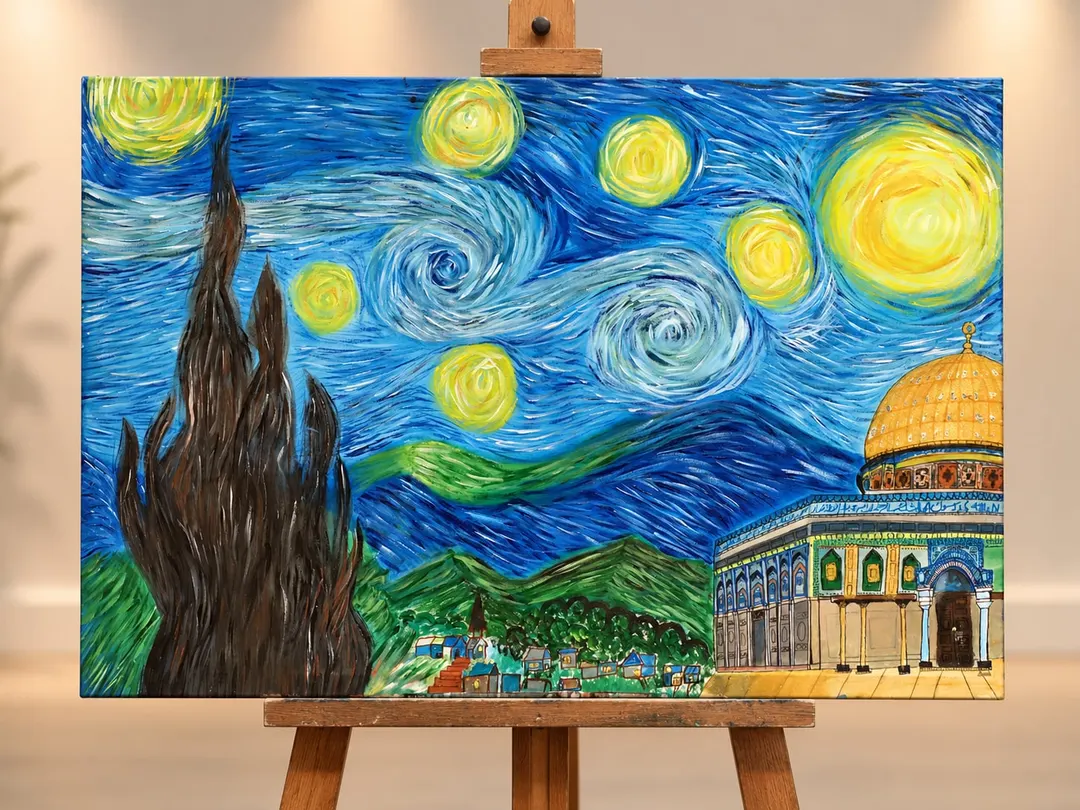
Starry Night over Al-Aqsa is a painting by Lahore artist Hafsa Imran. It sets the Dome of the Rock, at the heart of the al-Aqsa compound in Jerusalem, beneath the swirling sky, cypress and village of Van Gogh's The Starry Night. It was exhibited at the Rawalpindi Arts Council in February 2026.

Last updated:

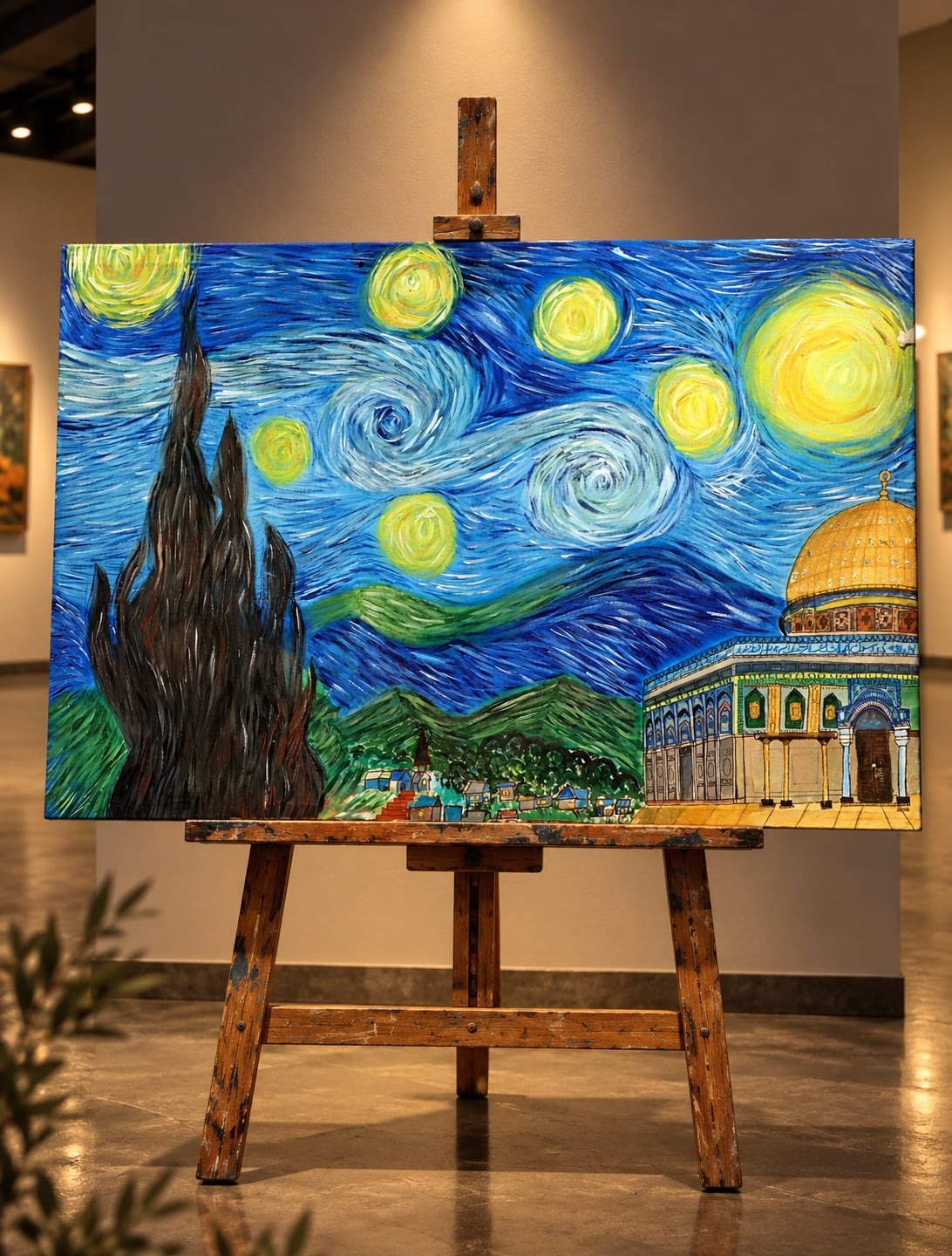
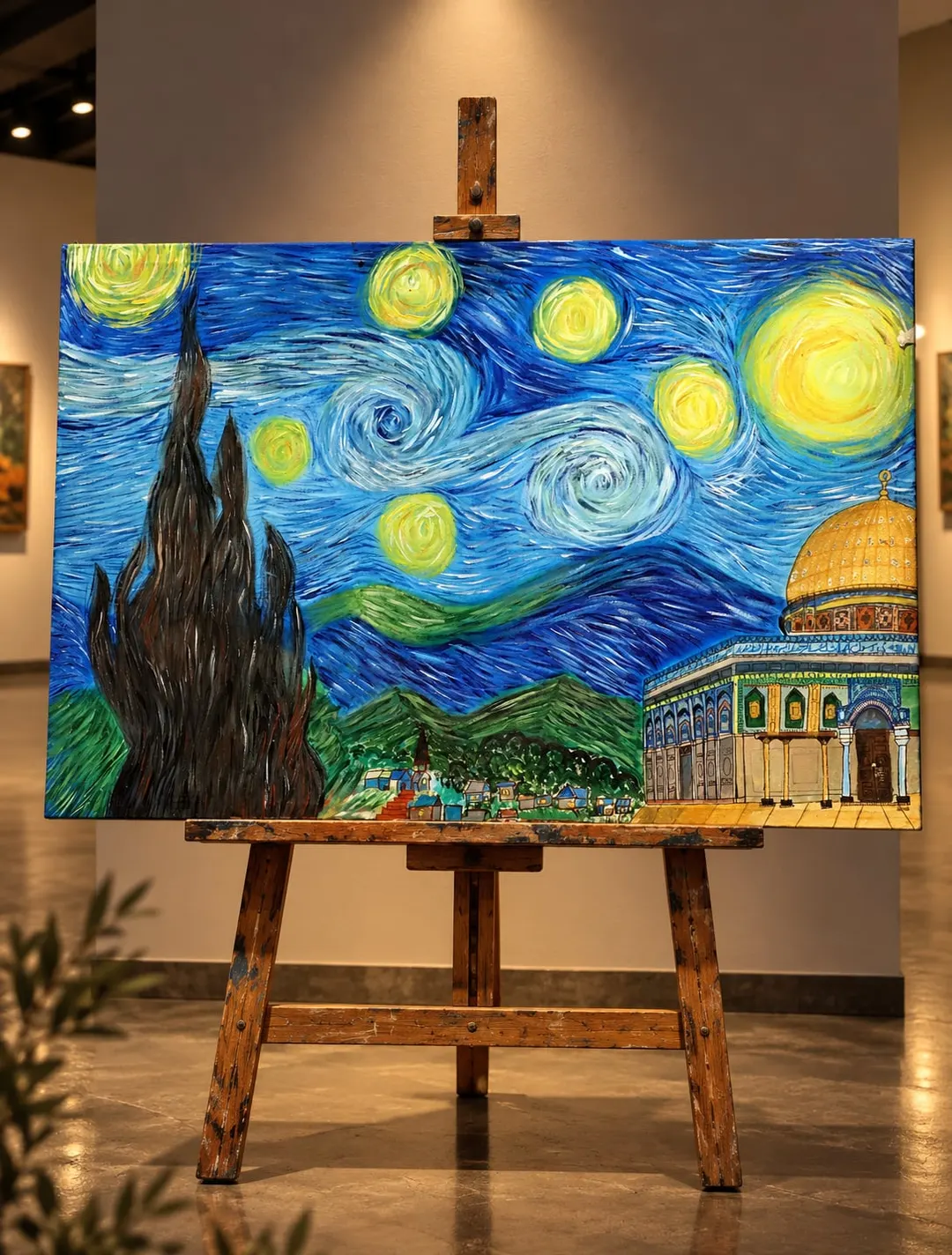
Starry Night over Al-Aqsa by Hafsa Imran on a wooden easel: the golden Dome of the Rock beneath a swirling blue night sky of yellow stars and a great yellow moon, with a dark cypress, green hills and a small village, in the manner of Van Gogh's The Starry Night
Hafsa Imran, Starry Night over Al-Aqsa. Hand-painted by Hafsa Imran.

Look closely

What is in the painting

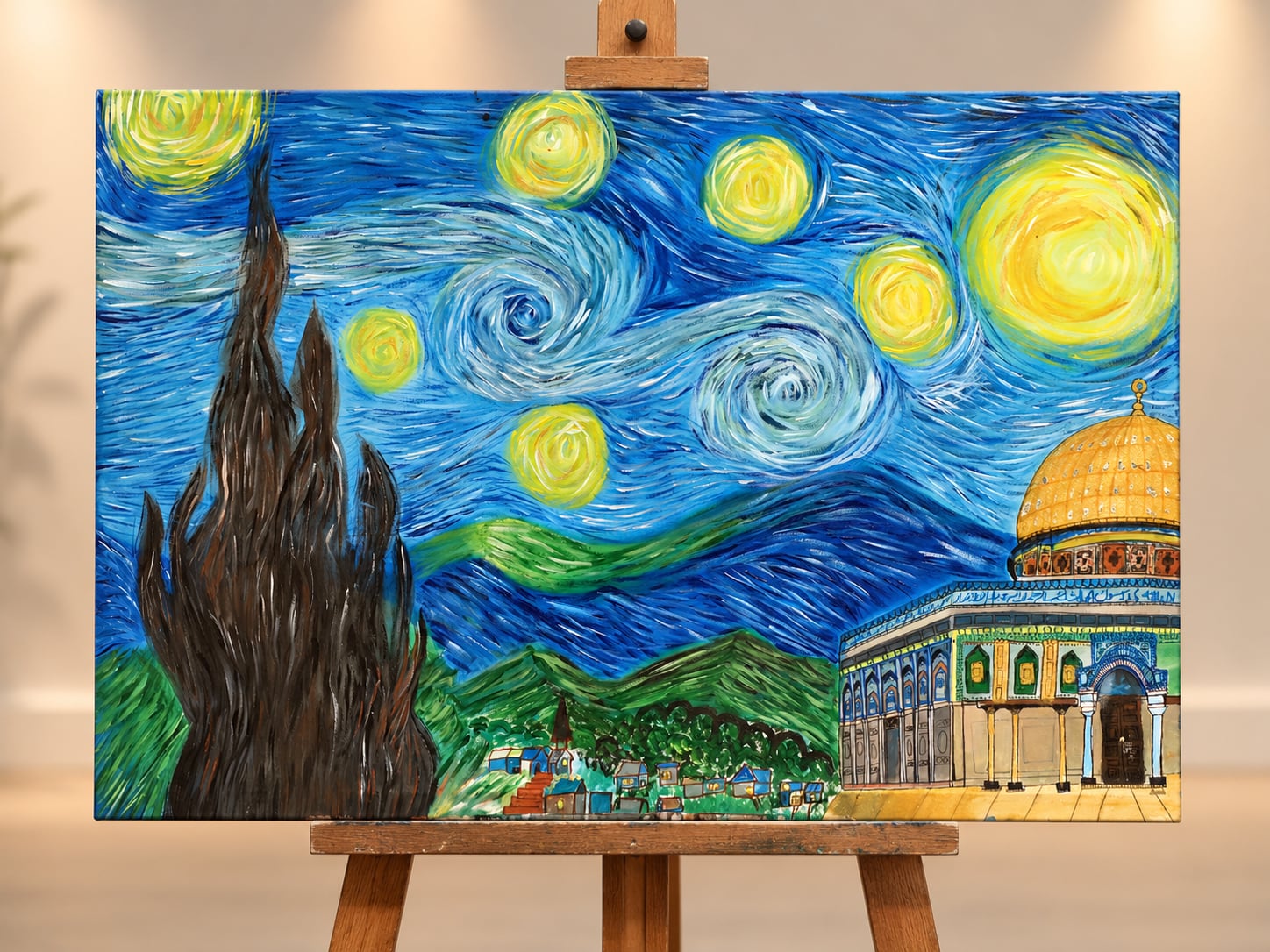
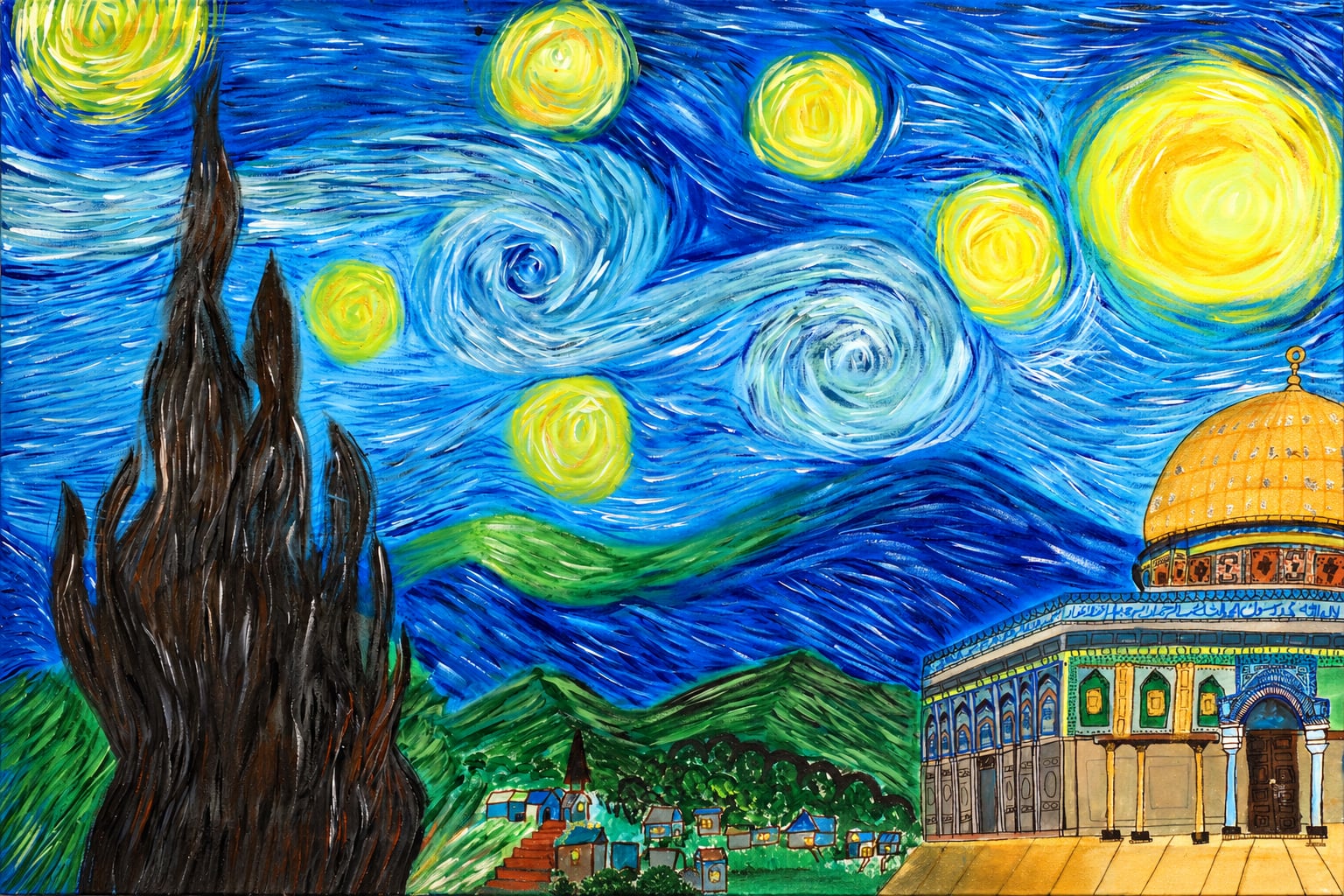
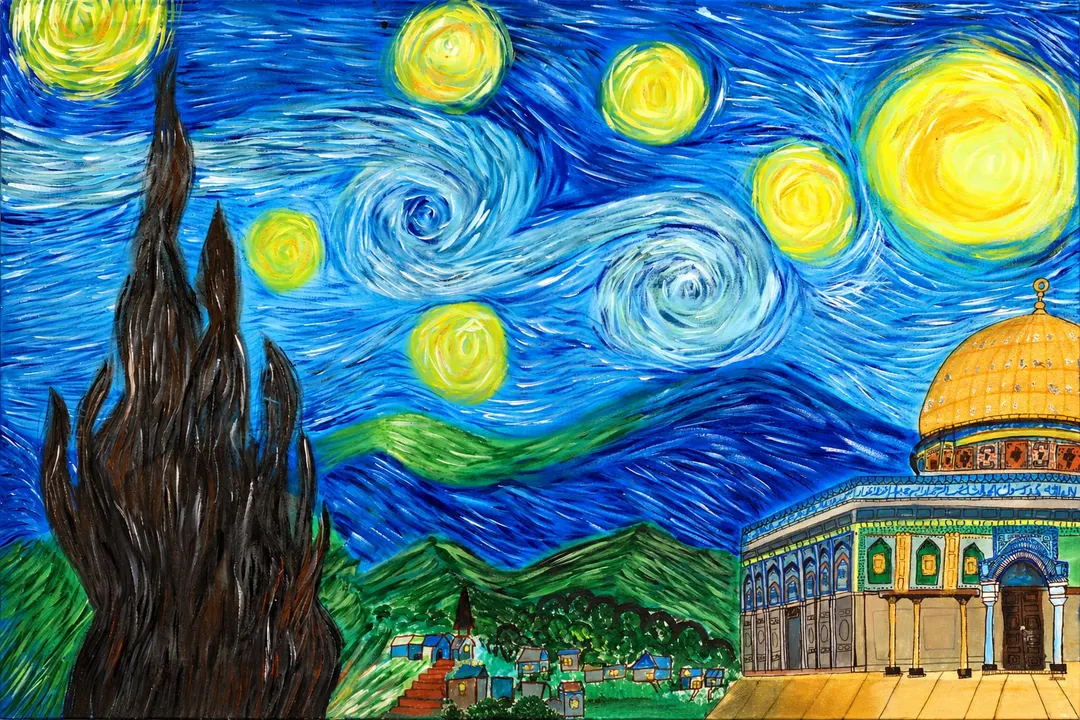
A swirling blue night sky fills most of the canvas, laid on in short, curving strokes of blue, white and pale green. Yellow stars burn in it, and in the upper right hangs a great yellow moon.

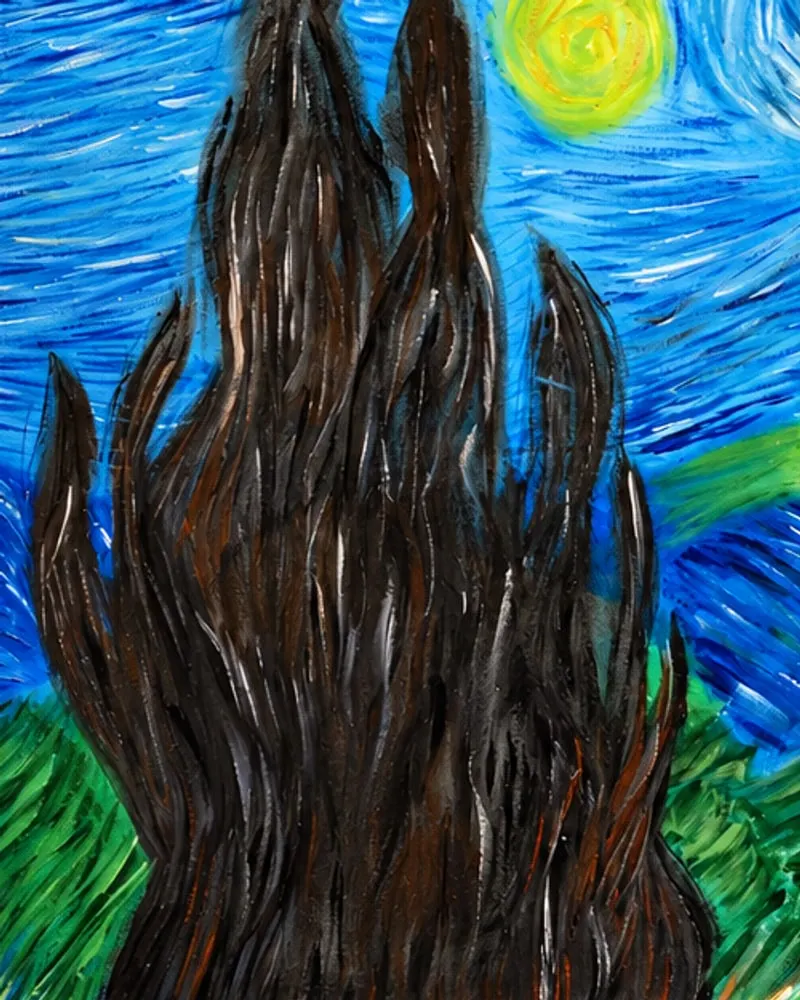
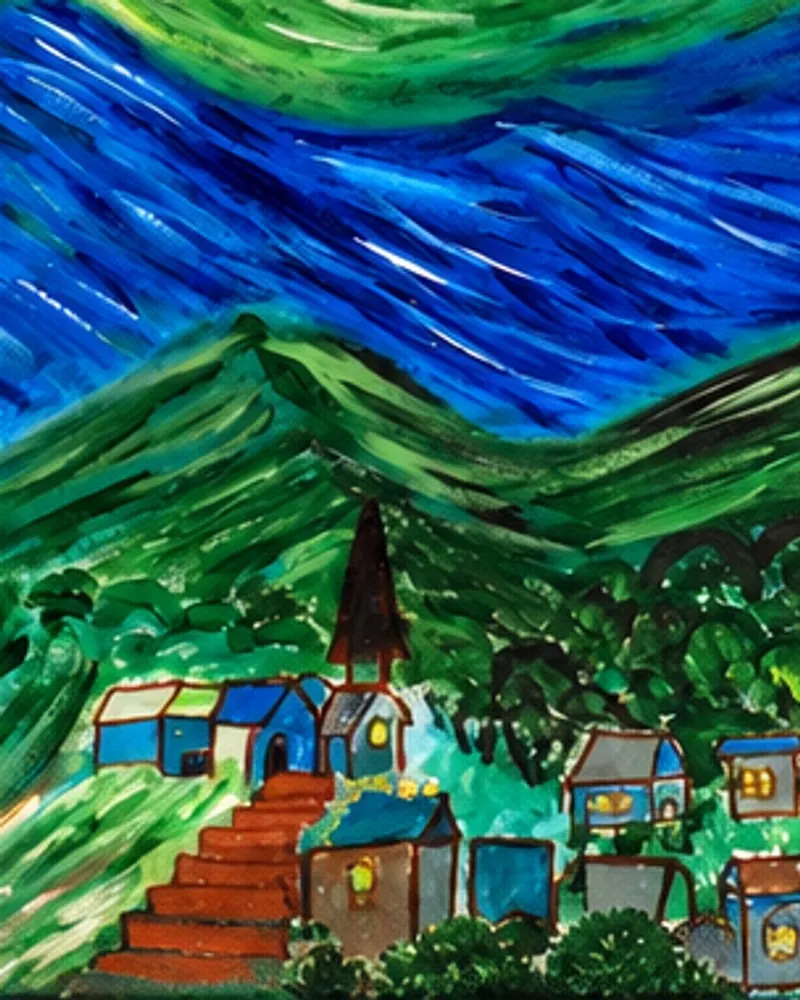
On the left a dark cypress rises like a flame. Below green hills a small village sleeps, a church steeple among its roofs and red steps climbing into it.

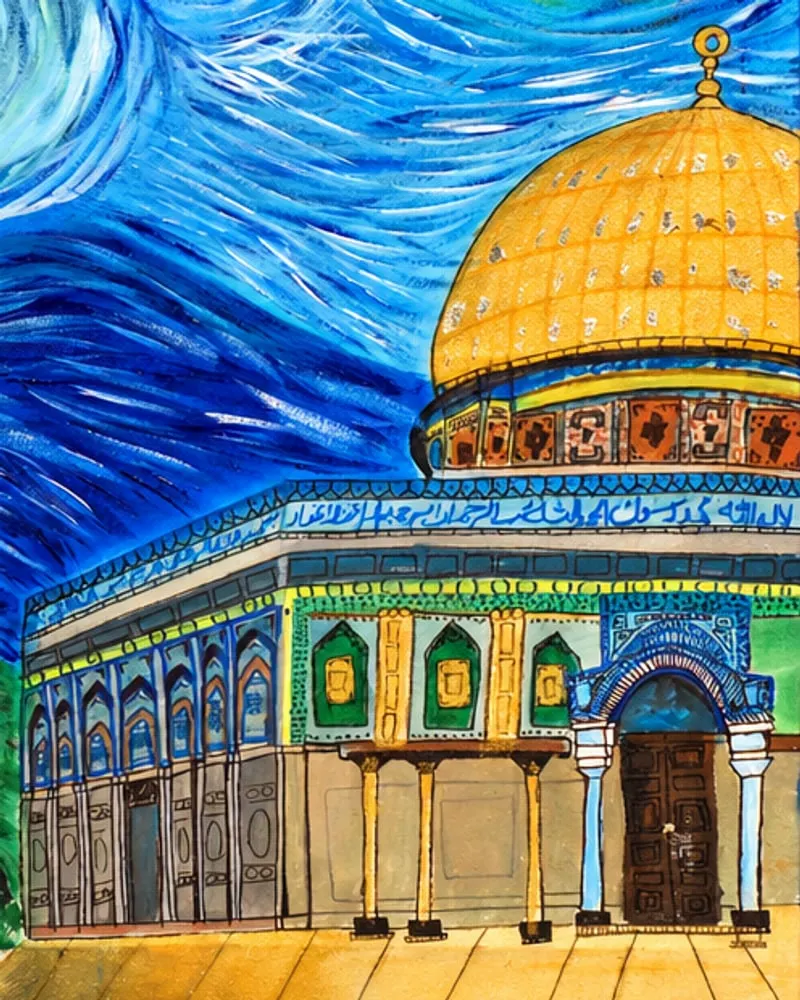
On the right stands the Dome of the Rock: its golden dome, the band of tiles beneath it, the blue and green tilework of its walls and, along the top of the building, a band of Arabic calligraphy, all painted in fine detail.

Artist
Hafsa Imran (Lahore, Pakistan)
Title
Starry Night over Al-Aqsa
Form
Painting, landscape format
After
Vincent van Gogh, The Starry Night (1889), Museum of Modern Art, New York
Exhibited
Rawalpindi Arts Council, February 2026
Images
Digital presentations of the painting, prepared with AI tools from a photograph of the canvas.
Detail of Starry Night over Al-Aqsa by Hafsa Imran: the golden dome, its band of tiles, the blue and green tilework and the band of Arabic calligraphy
Detail. The golden dome, its tiles and the band of calligraphy, where her painting and calligraphy meet.
Detail of Starry Night over Al-Aqsa by Hafsa Imran: the dark cypress rising like a flame against the swirling blue sky
Detail. The cypress, rising like a dark flame, as in Van Gogh's night.
Detail of Starry Night over Al-Aqsa by Hafsa Imran: the small village beneath green hills, a church steeple among its roofs and red steps climbing into it
Detail. The sleeping village, its steeple and red steps, kept from Van Gogh.
Starry Night over Al-Aqsa, a painting by Hafsa Imran: the whole canvas seen straight-on
Starry Night over Al-Aqsa, the whole canvas seen straight-on.

The story

Reading Starry Night over Al-Aqsa

A sky borrowed, openly

In June 1889, in the asylum at Saint-Rémy-de-Provence, Vincent van Gogh painted the view from his window just before sunrise, and added a village that was not there. The Starry Night now hangs in the Museum of Modern Art in New York, one of the best-known paintings in the world.

Hafsa keeps his sky, his cypress and his sleeping village. The borrowing is open: this is his night. What she changes is what the night is keeping watch over.
The place of the Night Journey

Where Van Gogh's hills fall away, she paints the Dome of the Rock, the golden-domed shrine at the heart of the al-Aqsa compound in Jerusalem. For Muslims, al-Aqsa is the third holiest site in Islam and the first direction of prayer.

It is also the destination of the Night Journey. The Quran opens its seventeenth chapter with God taking His servant by night from the Sacred Mosque in Makkah to the Farthest Mosque, al-Aqsa; from there, in Islamic belief, the Prophet rose through the heavens. So the night in this painting is not decoration. It is the hour the story belongs to.

Two practices meeting

Along the top of the building runs a band of Arabic calligraphy, painted by hand in fine strokes beneath the loose, swirling sky. The two ways of painting sit side by side on one canvas: Van Gogh's movement above, the patience of the calligrapher below.

A place known from far away

Every Pakistani passport carries the line "valid for all countries of the world except Israel". For people in Pakistan, al-Aqsa is a place known from photographs and from prayer, not from visits.

Van Gogh painted his night from a window he could not leave. Hafsa paints a sanctuary that, on a Pakistani passport, she cannot travel to. Both are views of a place held at a distance, and both are painted with longing.

The description and reading on this page are written by the Bloom & Beyond studio. They are our reading of the painting, not a statement by the artist.

Starry Night over Al-Aqsa, a painting by Hafsa Imran, on a wooden easel in a gallery
Starry Night over Al-Aqsa, hand-painted by Hafsa Imran, shown in a gallery.

Ask about the work

Interested in Starry Night over Al-Aqsa?

Collectors, curators, writers and anyone the painting has stayed with can message the studio directly. Hafsa reads every message.

Share the work

Starry Night over Al-Aqsa, ready for every screen

Share it with credit to Hafsa Imran and a link to this page. For print, publication or any commercial use, please message the studio first.

  • Starry Night over Al-Aqsa, a painting by Hafsa Imran, on a wooden easel in a gallery

    Portrait

    Instagram post or story · 1092×1440

    Download
  • Starry Night over Al-Aqsa, a painting by Hafsa Imran, on a wooden easel in a softly lit room

    Wide

    LinkedIn, X, a website banner · 1448×1086

    Download
  • Starry Night over Al-Aqsa, a painting by Hafsa Imran: the whole canvas seen straight-on

    Straight-on

    The whole canvas · 1536×1024

    Download
Ask about this painting

We use cookies to understand how you use our website and to improve your experience. Your data helps us serve you better. Learn more