Bloom & Beyond
Order on WhatsApp

+92 339 1000 203

A painting by Hafsa Imran

TasbihWhere Hearts Find Rest

Two hands, a string of beads and a circle of gold: the stillness of remembrance.

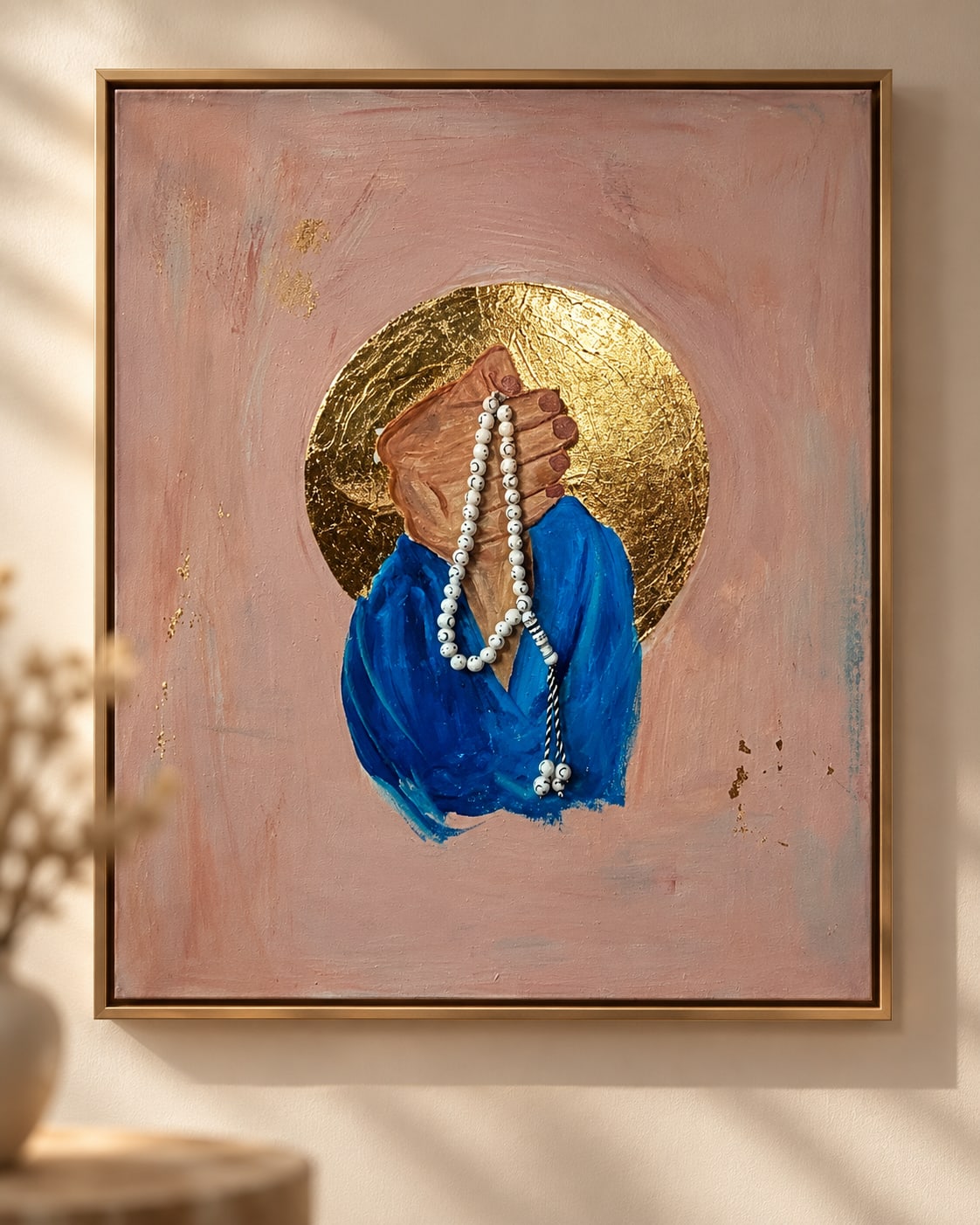
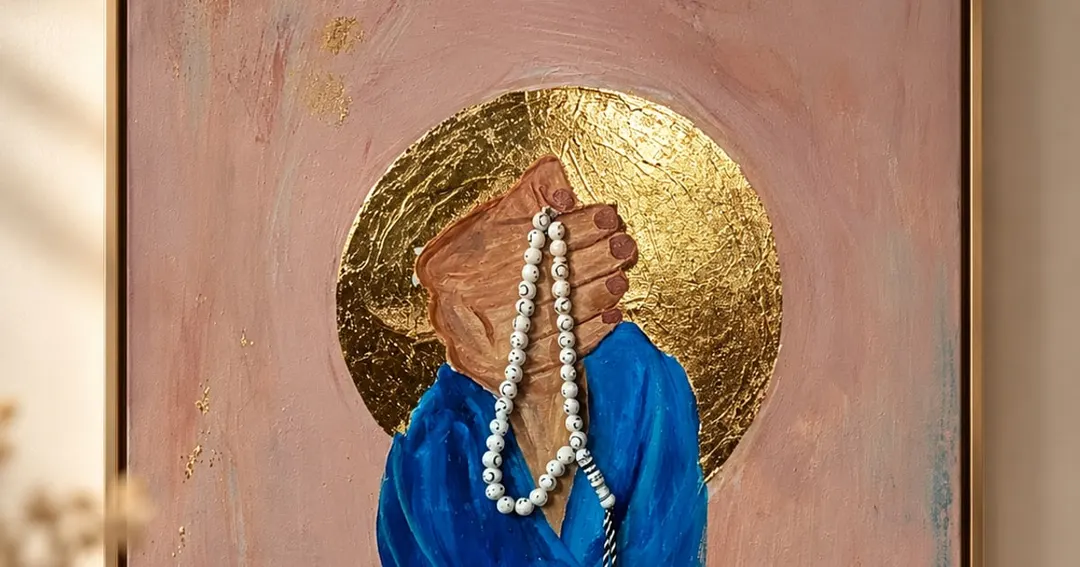
Tasbih (Where Hearts Find Rest) is a painting by Lahore artist Hafsa Imran. Two clasped hands in blue sleeves hold a string of white prayer beads before a circle of gold on a dusty pink ground. A tasbih is the string of beads Muslims use to count the remembrance of God.

Ask about Tasbih

Last updated:

Tasbih (Where Hearts Find Rest), a painting by Hafsa Imran in a gold frame: two clasped hands holding a string of white prayer beads, in blue sleeves, before a circle of gold on a dusty pink ground flecked with gold
Hafsa Imran, Tasbih (Where Hearts Find Rest). Hand-painted by Hafsa Imran.

Look closely

What is in the painting

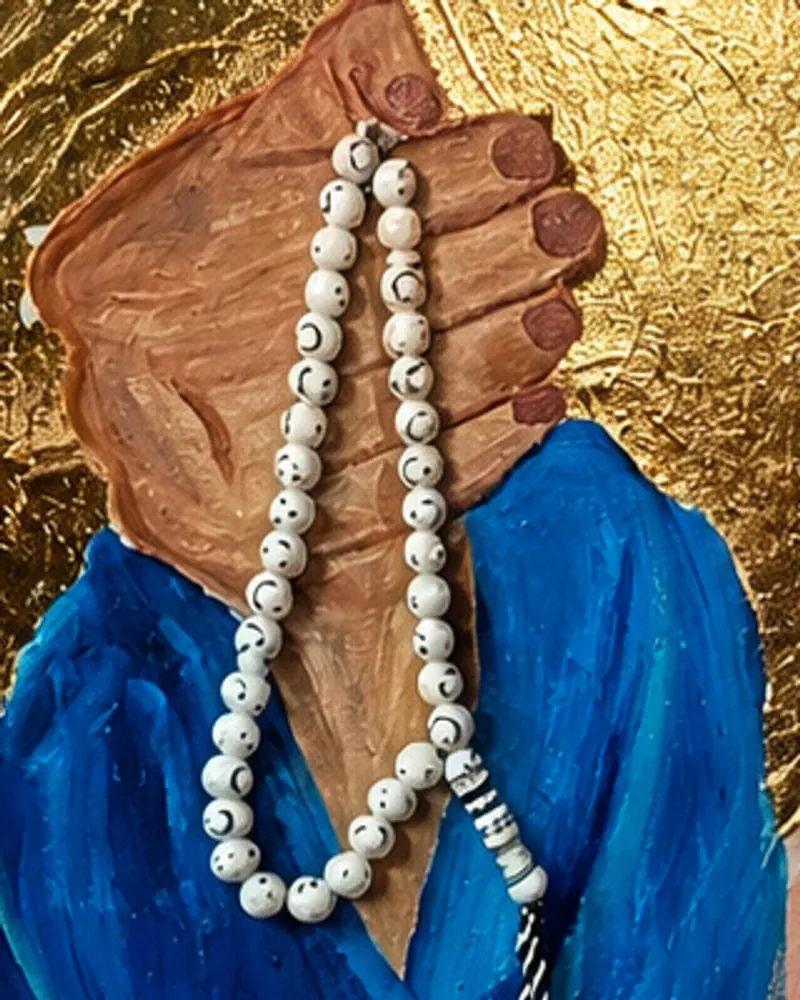
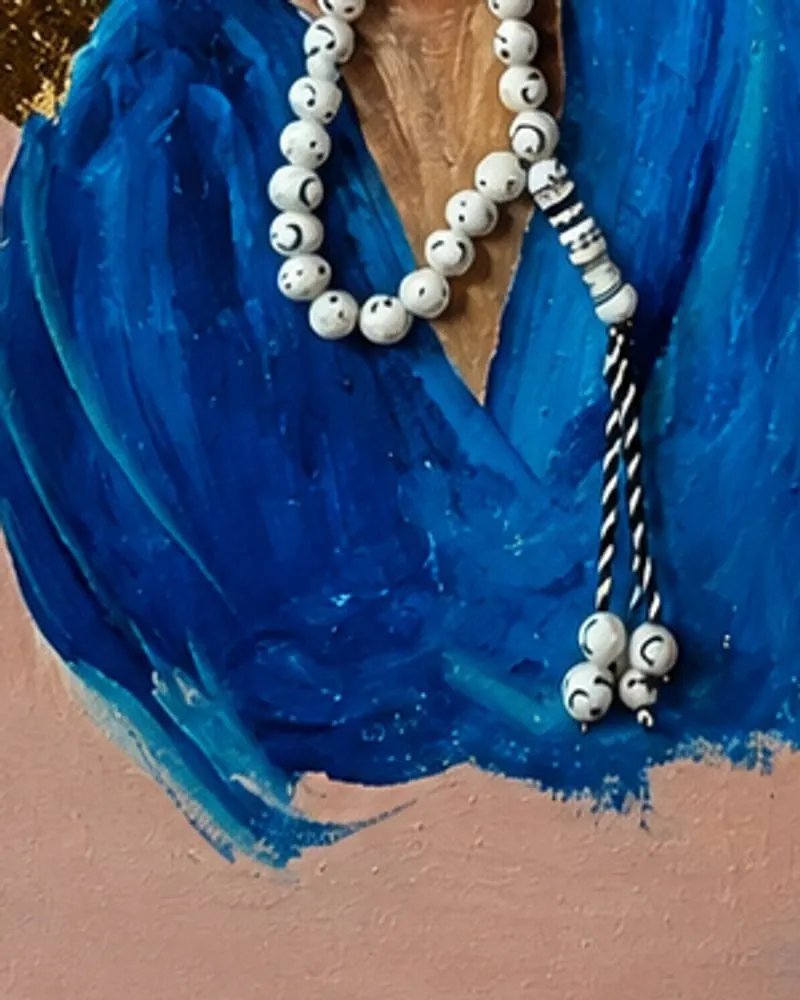
Two hands are clasped together, one folded over the other, and a string of white prayer beads hangs from them, ending in a black-and-white tassel.

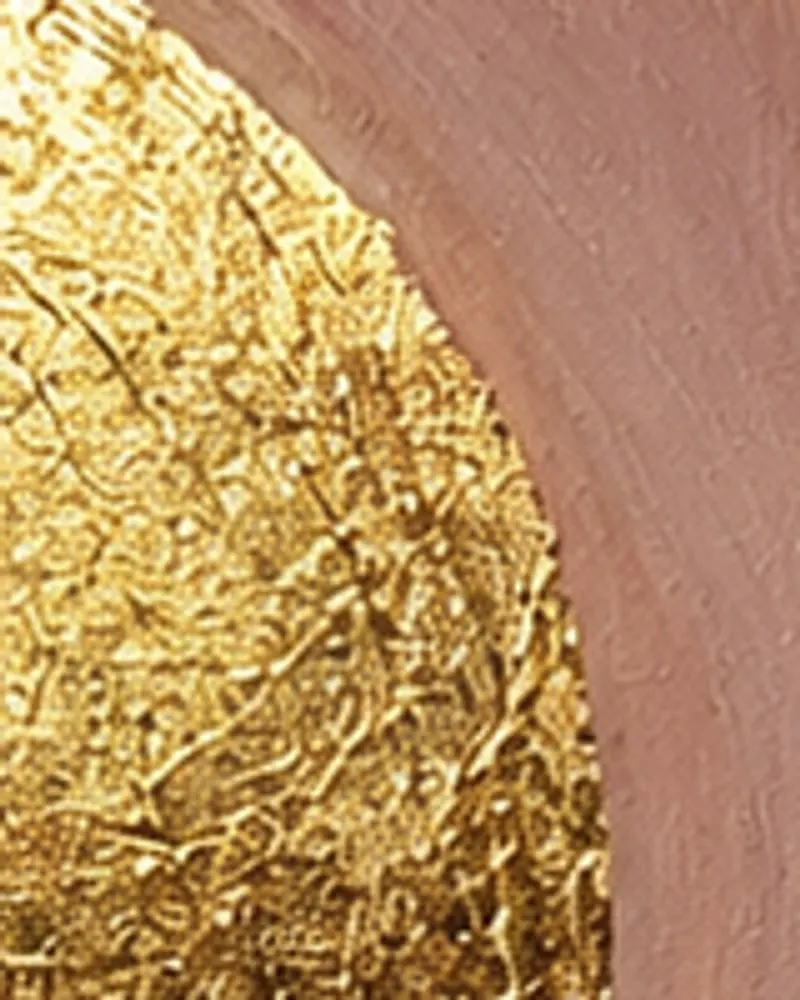
The sleeves below are a deep, loosely brushed blue. Behind the hands is a circle of gold with the crinkled shine of gold leaf, like a sun or a halo.

Around it all, the ground is a soft dusty pink, with small flecks of gold scattered across it.

Artist
Hafsa Imran (Lahore, Pakistan)
Title
Tasbih (Where Hearts Find Rest)
Form
Painting, portrait format
Images
Digital presentation of the work, prepared with AI tools from a photograph of the canvas.
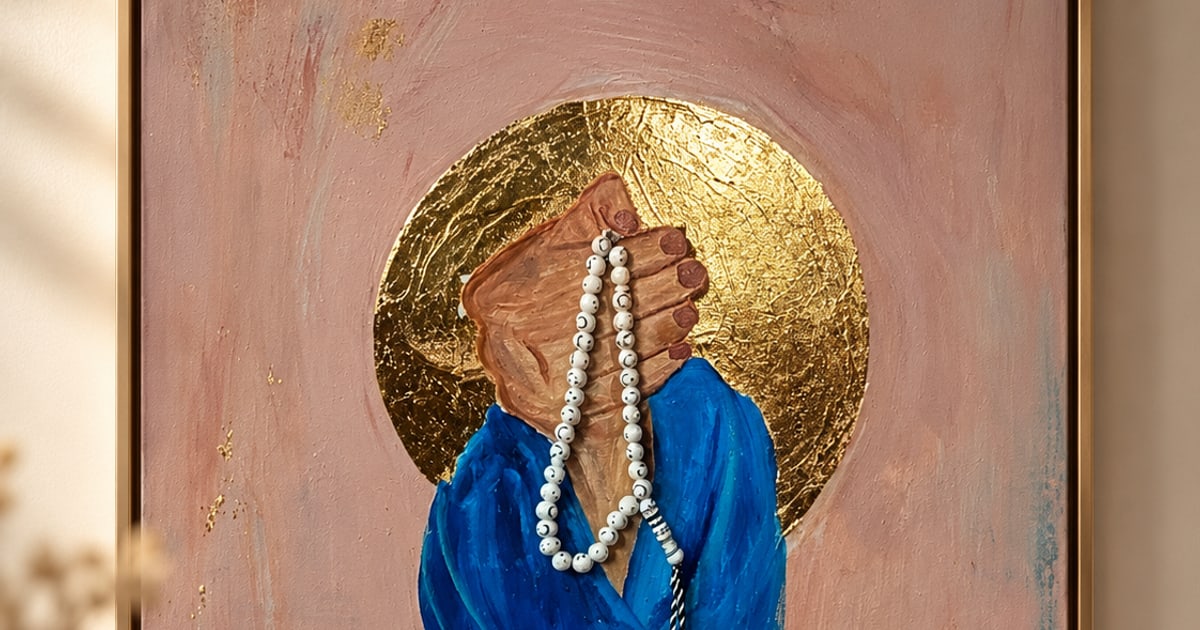
Detail of Hafsa Imran's Tasbih: two clasped hands holding a string of white prayer beads against the gold circle
Detail. The clasped hands and the string of white beads.
Detail of Hafsa Imran's Tasbih: the crinkled gold circle meeting the dusty pink ground
Detail. The circle of gold, with the crinkled shine of gold leaf.
Detail of Hafsa Imran's Tasbih: the loosely brushed blue sleeves and the tassel of the prayer beads
Detail. The blue sleeves and the tassel at the end of the beads.

The story

Reading Tasbih

The best-known hands in prayer

In 1508 Albrecht Dürer drew a pair of hands pressed together in prayer, a study for an altarpiece. The drawing, now in the Albertina in Vienna, became one of the best-known images of prayer in Western art.

Hafsa's hands are not pressed flat. They are closed around something: a tasbih, the string of beads Muslims use to count their remembrance of God, bead by bead and word by word.
Where hearts find rest

After prayer, many Muslims count on the beads: glory be to God, praise be to God, God is greatest, thirty-three times each. The Quran gives the reason in a single line: verily, in the remembrance of Allah do hearts find rest (13:28).

The title is that line.

A circle of gold

The gold behind the hands could be a sun, a halo, or simply light. It is the brightest thing on the canvas, and the hands are held up against it, not turned towards it.

The description and reading on this page are written by the Bloom & Beyond studio. They are our reading of the painting, not a statement by the artist.

Ask about the work

Interested in Tasbih?

Collectors, curators, writers and anyone the painting has stayed with can message the studio directly. Hafsa reads every message.

Share the work

Tasbih, ready for every screen

Share it with credit to Hafsa Imran and a link to this page. For print, publication or any commercial use, please message the studio first.

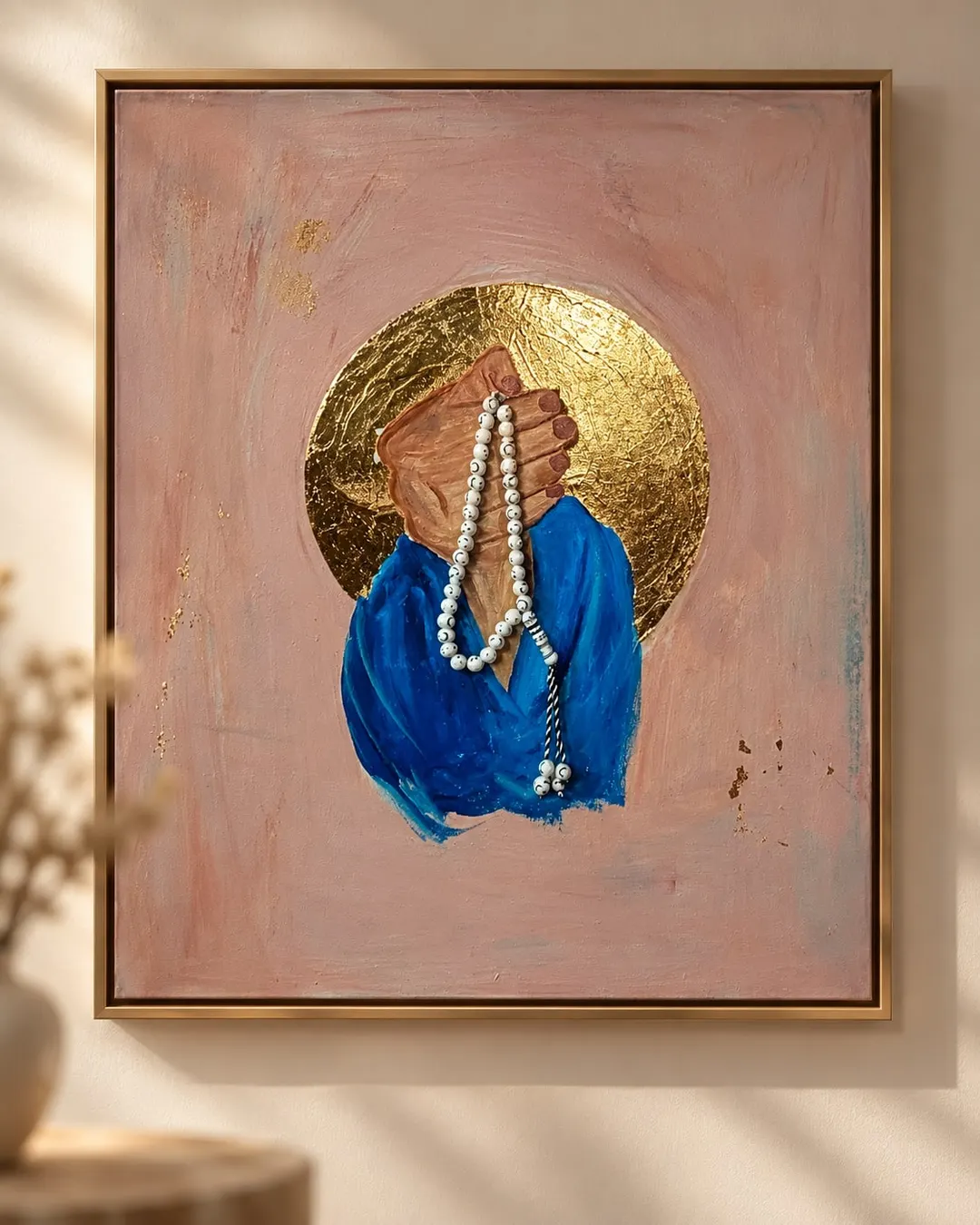
  • Tasbih (Where Hearts Find Rest), a painting by Hafsa Imran in a gold frame: two clasped hands holding a string of white prayer beads, in blue sleeves, before a circle of gold on a dusty pink ground flecked with gold

    Portrait

    Instagram post or story · 1122×1402

    Download
  • Tasbih (Where Hearts Find Rest), by Hafsa Imran, wide format

    Wide

    LinkedIn, X, a website banner · 1200×630

    Download
Ask about this painting

We use cookies to understand how you use our website and to improve your experience. Your data helps us serve you better. Learn more